Koalas, without the guesswork.
Not a bear: a tree-dwelling marsupial with a specialist eucalyptus diet, a backward-facing pouch, and a conservation story that is not the same in every part of Australia. Every fact traced to a source and dated where it can change, plus games and Useless up a gum tree.
The short version
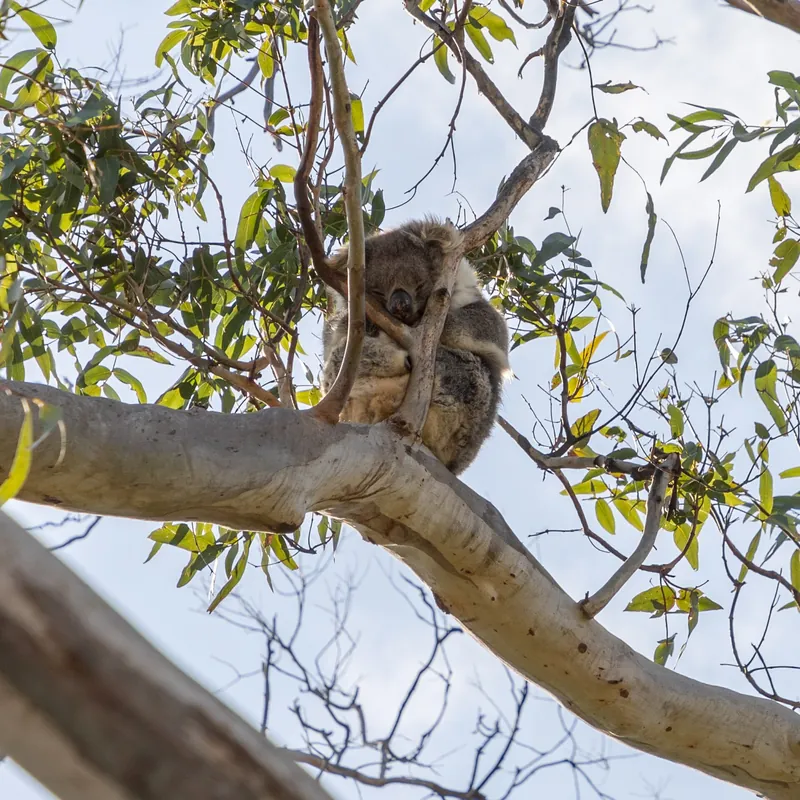
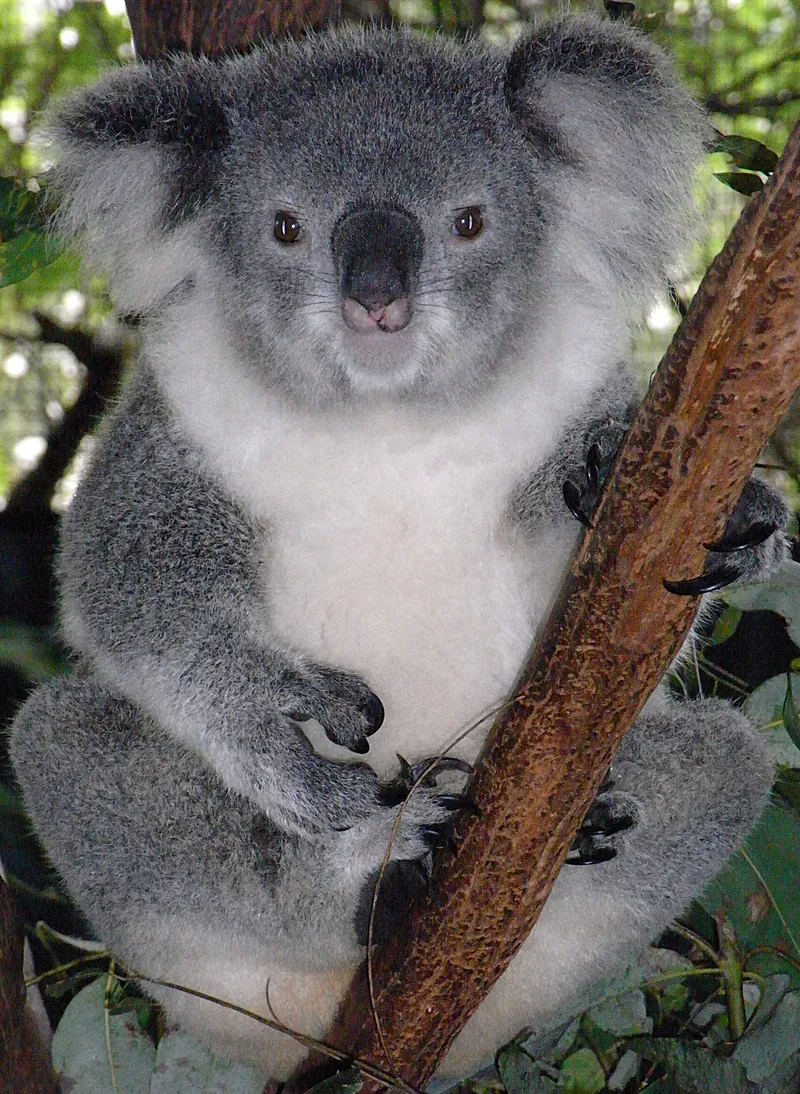
Koalas are marsupials: mammals that give birth to underdeveloped young. Queensland Government: Koala facts They are different enough from other marsupials to be placed in their own family, Phascolarctidae. Queensland Government: Koala facts
Their closest living relatives are wombats, and both have a backward-facing pouch. Queensland Government: Koala facts
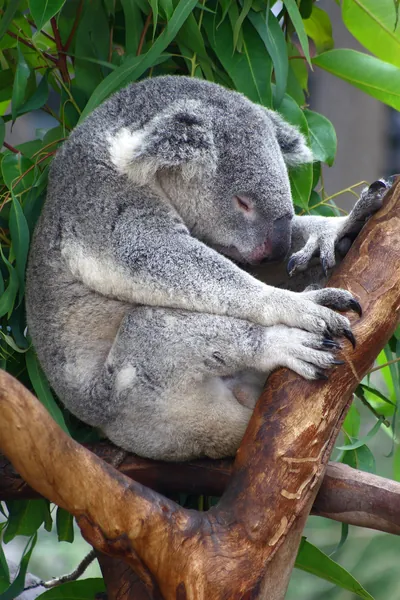
The diet is highly specialised: mainly the leaves of certain eucalypts, plus some flowers and stems, and a few related trees such as lophostemon, melaleuca and corymbia (brush box, paperbark and bloodwood). Queensland Government: Koala facts Koalas can sleep for up to 20 hours a day, because their diet is low in energy and breaking down the toxic leaves takes work. Queensland Government: Koala facts
Conservation status depends on where you look. See threats & status.
Start here
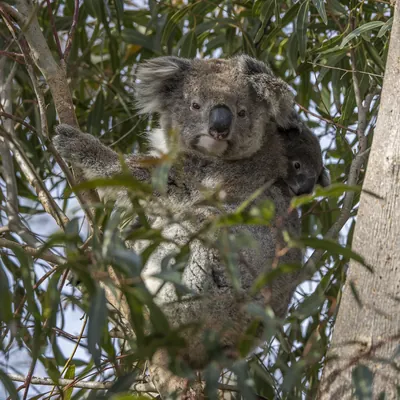
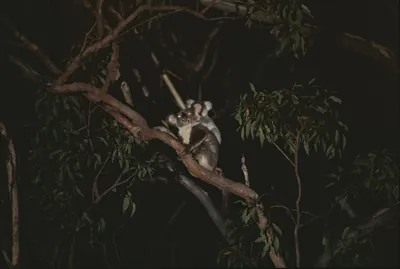
- The IUCN Red List assesses the koala (Phascolarctos cinereus) as Vulnerable globally, under criteria A2b+3bce+4bce. The assessment date is 27 May 2014 (published 2020, and annotated as needing an update). IUCN Red List: Koala (Phascolarctos cinereus) · checked 12 Nov 2026
- The combined koala populations of Queensland, New South Wales and the Australian Capital Territory have been listed as Endangered under Australia’s EPBC Act, in effect from 12 February 2022. Australian Government conservation advice for the listed koala (in effect 12 February 2022) · checked 12 Nov 2026
- Other koala populations, in Victoria and South Australia, are not listed as threatened under the EPBC Act. Australian Government conservation advice for the listed koala (in effect 12 February 2022) · checked 12 Nov 2026
Both can be true at once. The IUCN assesses the species as Vulnerable worldwide. Under Australian law, the combined Queensland, New South Wales and ACT populations are listed as Endangered from 12 February 2022; Victorian and South Australian populations are not listed as threatened under the EPBC Act. Every disagreement we found →
Enjoying the koalas? Help keep the lights on.
This site is hand-built, fact-checked and free to read. If a fact, a game or one of Useless’s notes made you smile, a little support keeps it going and helps the network grow.