A specialist leaf-eater
Almost a eucalyptus diet, a long caecum, and a joey that has to borrow its mother’s gut bacteria.
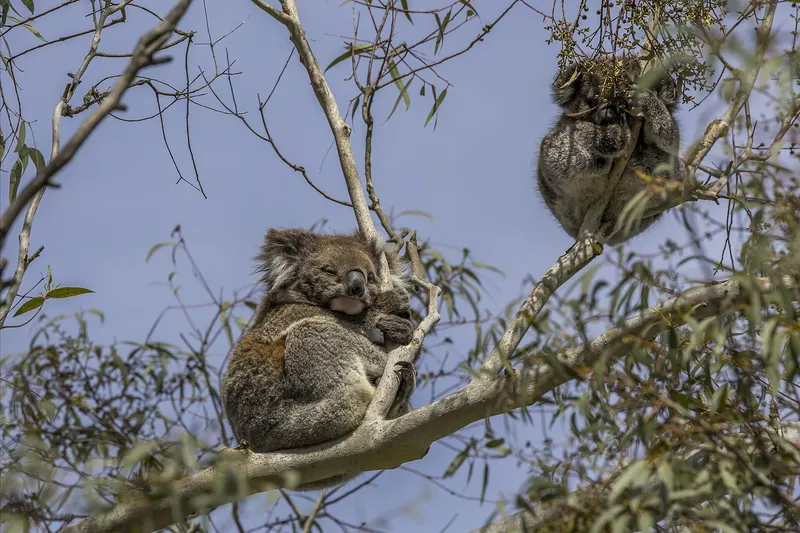
The diet is highly specialised: mainly the leaves of certain eucalypts, plus some flowers and stems, and a few related trees such as lophostemon, melaleuca and corymbia (brush box, paperbark and bloodwood). Queensland Government: Koala facts The Australian Museum likewise describes a specialised diet of certain eucalypt leaves, with some flowers and stems, and a long caecum to help digest the fibrous leaves. Australian Museum: Koala
A koala eats around 500 grams of leaves a day — about the size of a small lettuce. Queensland Government: Koala facts The leaves are low in energy, with only about 5% sugars and starches on average, and they contain toxic oils that most animals cannot eat. Queensland Government: Koala facts
A specialised gut, including an elongated, coiled caecum, and gut bacteria break the leaves down; joeys are not born with those bacteria. Queensland Government: Koala facts The mother passes those bacteria to the joey in a sticky, runny faecal substance called pap, which the young ingests instinctively. Queensland Government: Koala facts
Do they drink?
Most of their water comes from the leaves, which can be up to about 50% water, so they often have no need to climb down for a drink — except in very hot or dry periods. Queensland Government: Koala facts
- Most of their water comes from the leaves, which can be up to about 50% water, so they often have no need to climb down for a drink — except in very hot or dry periods. Queensland Government: Koala facts
They get most of their water from leaves, which is why the “never drink” story spread — but official Queensland advice is that they will climb down for a drink in very hot or dry weather. Every disagreement we found →
The IUCN assessment also describes a specialist diet, mostly Eucalyptus foliage with occasional leaves of other, mostly myrtaceous, plants. IUCN Red List assessment PDF: Koala (Phascolarctos cinereus)